Skip to content

Farm and field

Agricultural fencing

Stock netting, wire and boundary lines for working land, planned around the animals, the ground and how the field is actually used.

Photo gallery

Select a photograph to see it in full.

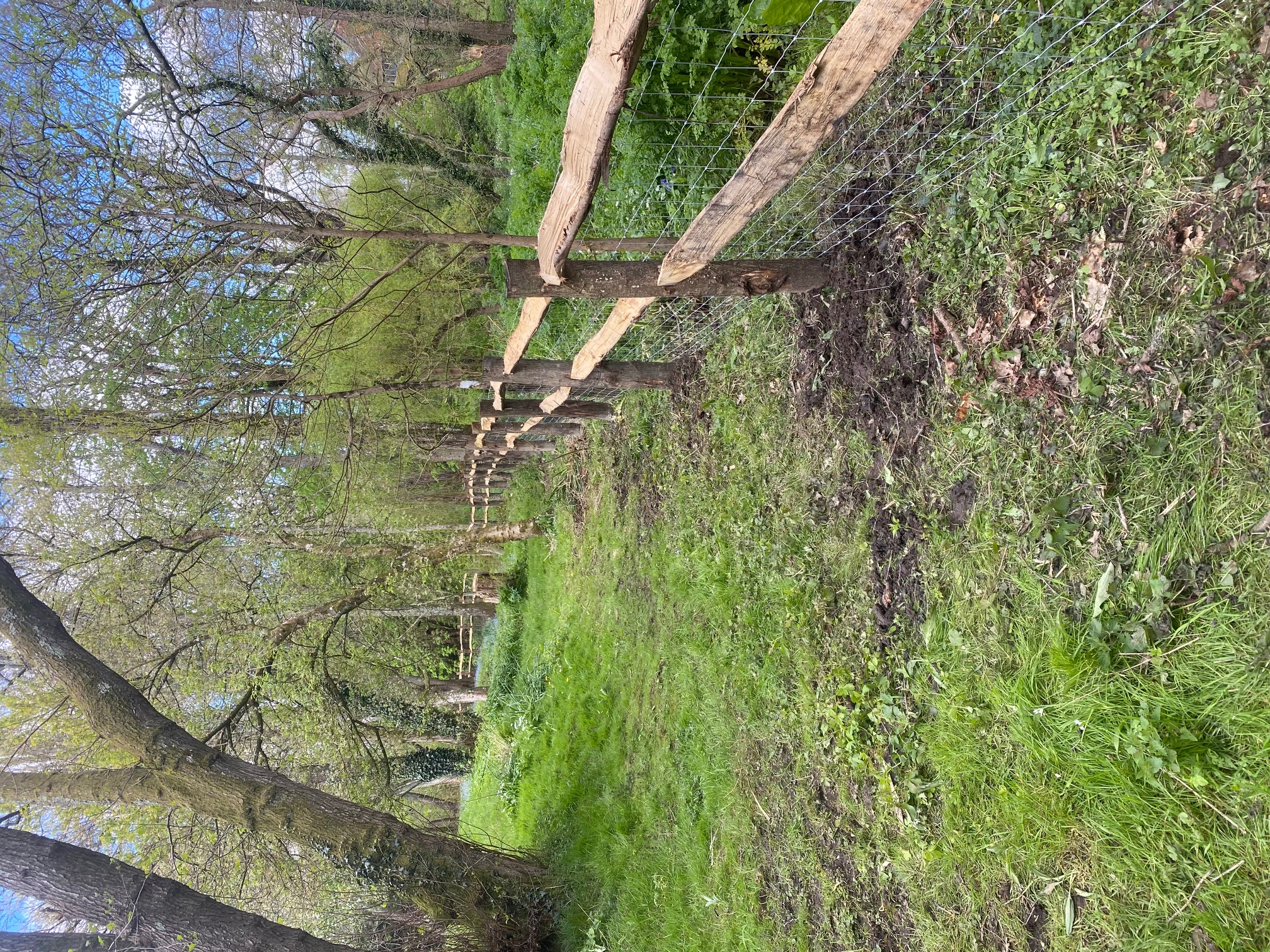
Rustic post and rail fencing with wire mesh in woodland

01Overview

How to think about it.

A farm fence has to do a plain job every day: keep stock where they should be and keep them out of where they should not. What that takes depends on what is in the field, how the land lies and where the gates need to go. We talk through those things first, then build the line to suit.

02Types we offer

What each one is for.

Stock netting

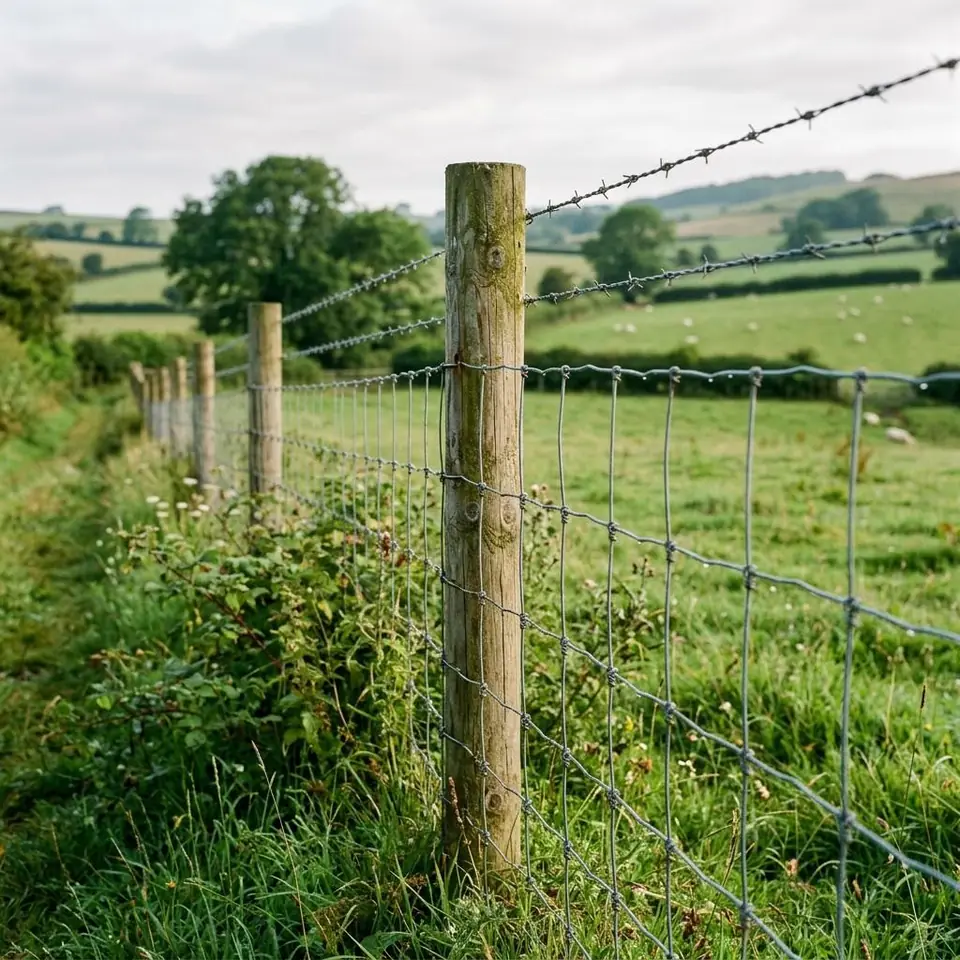
Woven wire netting stretched between timber posts, with the mesh sized to the animals it has to hold.

Suits
Sheep and mixed grazing, and fields where animals of different sizes share a boundary.
Consider
Netting needs a well-strained line and firm end assemblies. The mesh choice depends on what is in the field now and what might be later.

Plain and barbed wire

Strands of wire strained between posts, either on their own or added above netting.

Suits
Cattle fields, outer boundaries and lines where a lighter fence is enough.
Consider
Wire type and the number of strands depend on the stock. Barbed wire is not suitable everywhere, particularly beside public routes or where horses graze.

Boundary and hedge-line fencing

A fence set out along an existing or new land boundary, often beside a hedge or ditch.

Suits
Marking and protecting field edges, neighbouring land and young hedge planting.
Consider
Sort out where the boundary actually is before posts go in, and leave room for hedge growth and maintenance.

Gateways and straining posts

Heavier posts, struts and gates that take the load of the line and keep it tight.

Suits
Every run of fence. These are the parts that hold everything else up.
Consider
Gate width, position and how machinery moves through the field should be settled early.

03Choosing well

Things worth deciding first.

Different stock, different fence

Sheep, cattle, pigs and mixed grazing do not all need the same height, mesh or number of strands. Tell us what is in the field now and what may go in later.

Terrain and ground

Slopes, dips, wet ground and rock all change how posts are set and how a line is strained. A walk of the boundary is the best way to plan for them.

Choosing the layout

Straight, well-braced runs with strong corners usually hold up best. Where a line has to follow a curving boundary, the number of strainers goes up.

Repair or replace

Sometimes a section can be mended. Sometimes the posts have gone and it is more sensible to renew the run. We will tell you which looks right once we have seen it.

Prices depend on the job, so none are listed here. Call or email with the details.

04 / How a job runs

  1. 1

    Walk the line and talk through stock, ground and gateways

  2. 2

    Agree the layout, posts, strainers and fencing type

  3. 3

    Set the posts and strainers, then hang and tension the fencing

  4. 4

    Hang gates and tidy the line

05FAQ

Common questions.

Can you replace just part of an old fence?

Often, yes. It depends on the condition of the posts and the wire that remains. It is worth having someone look at the whole line before deciding.

Which fence is right for my animals?

That depends on the species, the age of the animals and whether the field is shared. Call and describe the stock and we will talk through the options.

Can you also hang gates?

Yes. Gateways are part of the job, and we can plan gate position and width with you.